
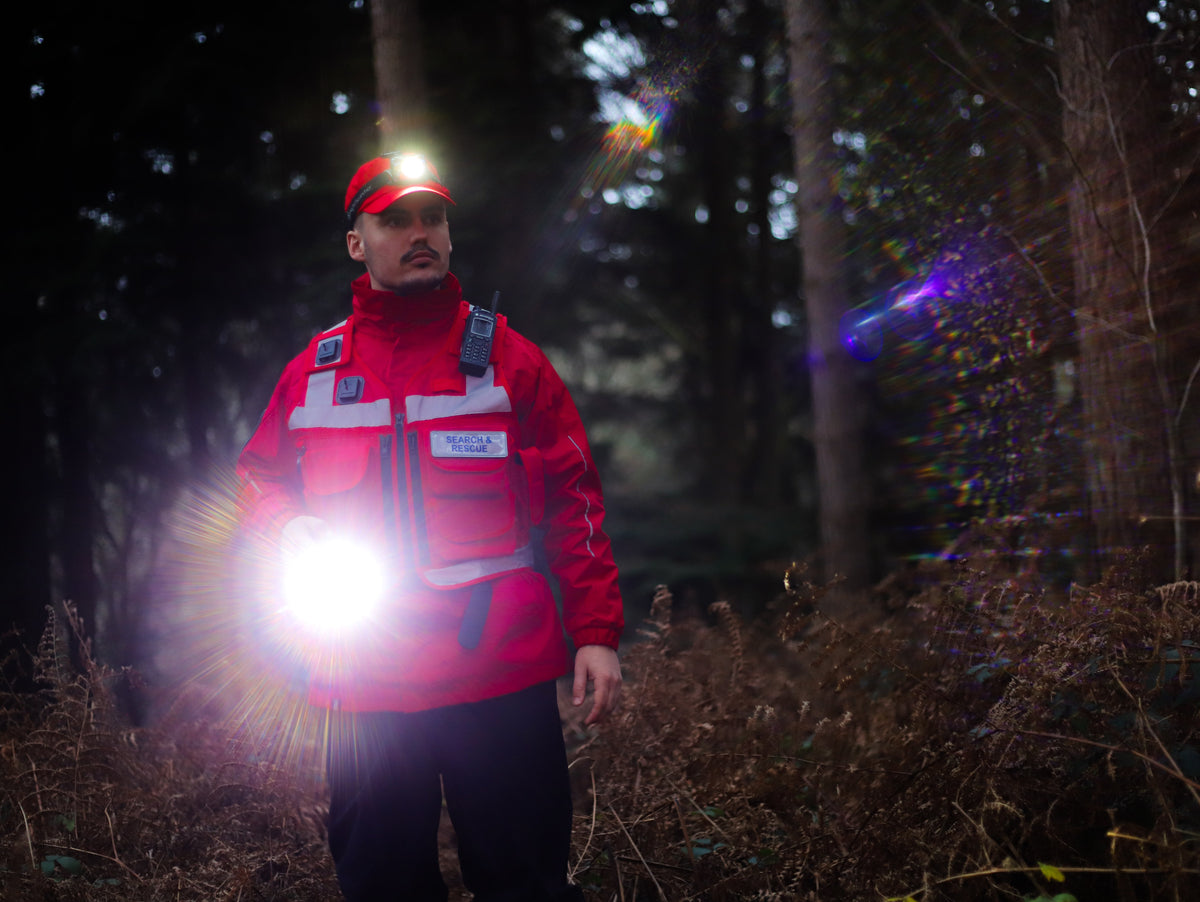
When every second counts, reliable lighting becomes mission-critical. Whether you're conducting a mountain rescue, searching woodland for a missing person, responding to a coastal emergency, or supporting a community search and rescue (SAR) operation, the right torch or head torch can dramatically improve visibility, communication, safety and effectiveness.
Professional search and rescue teams rely on more than just brightness. They need dependable equipment that performs in rain, mud, cold temperatures and challenging terrain. The best search and rescue torches combine powerful illumination, long runtime, rugged construction and intuitive operation under pressure.
At NightSearcher, we design professional-grade rechargeable torches, head torches and portable lighting systems trusted by emergency responders, security professionals, outdoor workers and rescue teams across the UK. This guide explains what to look for when choosing a search and rescue torch and highlights the features that matter most in real-world operations.
What Makes a Good Search and Rescue Torch?
A search and rescue torch must do far more than illuminate a path. In demanding environments, lighting equipment is used to:
- Locate casualties
- Search large outdoor areas
- Identify hazards
- Signal team members
- Support first aid treatment
- Assist navigation
- Improve safety during low-light operations
A dependable rescue torch should offer:
- High lumen output
- Excellent beam distance
- Long battery runtime
- Rechargeable convenience
- Weatherproof protection
- Impact resistance
- Easy operation when wearing gloves
- Reliable performance in challenging conditions
Many people focus solely on brightness, but experienced SAR professionals understand that usability, beam quality and reliability are equally important.
Why Search and Rescue Teams Need More Than One Light Source
One of the biggest mistakes people make is relying on a single torch.
Professional rescue teams typically carry multiple lighting options because every light serves a different purpose. If a battery becomes depleted, a torch is damaged or another team member requires lighting support, operations can continue safely.
A practical search and rescue lighting setup often includes:
- A primary handheld search torch
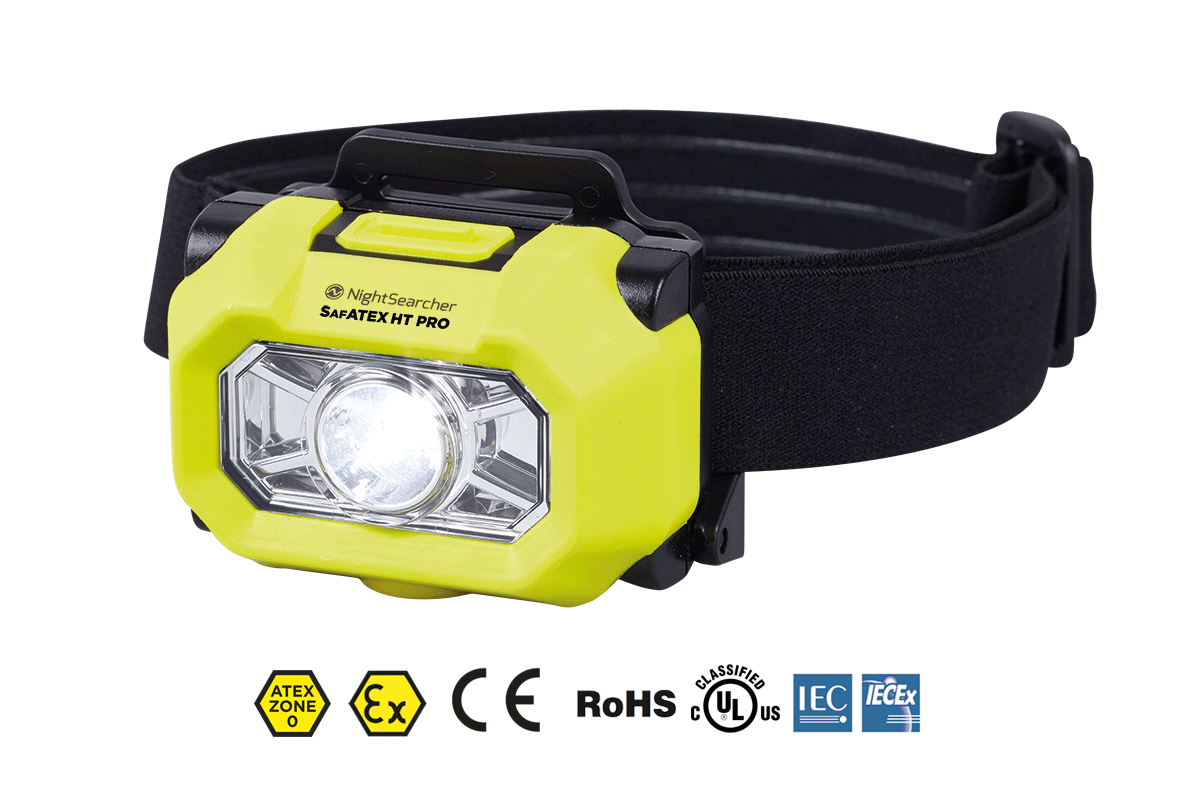
- A high-powered head torch
- A compact backup torch
- An area light for staging locations
- Spare batteries or charging equipment
This layered approach improves resilience and ensures responders always have access to dependable illumination.
Recommended NightSearcher Search and Rescue Lighting Solutions
HT2200R Rechargeable Head Torch
A powerful head torch is often the most important piece of lighting equipment during a rescue operation.
The NightSearcher HT2200R delivers up to 2200 lumens of hands-free illumination, making it ideal for navigating difficult terrain, assessing casualties, operating rescue equipment and conducting technical rescues.
Unlike handheld torches, a head torch keeps both hands free for:
- Rope work
- Casualty care
- Map reading
- Equipment handling
- Radio communication
The HT2200R is particularly suited to:
- Mountain rescue
- Cave rescue
- Low-light navigation
- Emergency medical response
- Extended SAR deployments
For professionals searching for the best rechargeable head torch for search and rescue, the HT2200R offers an excellent balance of power, runtime and comfort.

LightWave 1000R Rechargeable Torch
The LightWave 1000R is a versatile rechargeable LED torch designed for everyday professional use.
Its combination of portability, runtime and dependable performance makes it a valuable addition to search and rescue kits, emergency response vehicles and patrol operations.
The LightWave 1000R is well suited for:
- Search team leaders
- Vehicle deployment kits
- Emergency preparedness
- Security patrols
- Outdoor operational use
For many users, this torch provides an ideal balance between portability and performance.

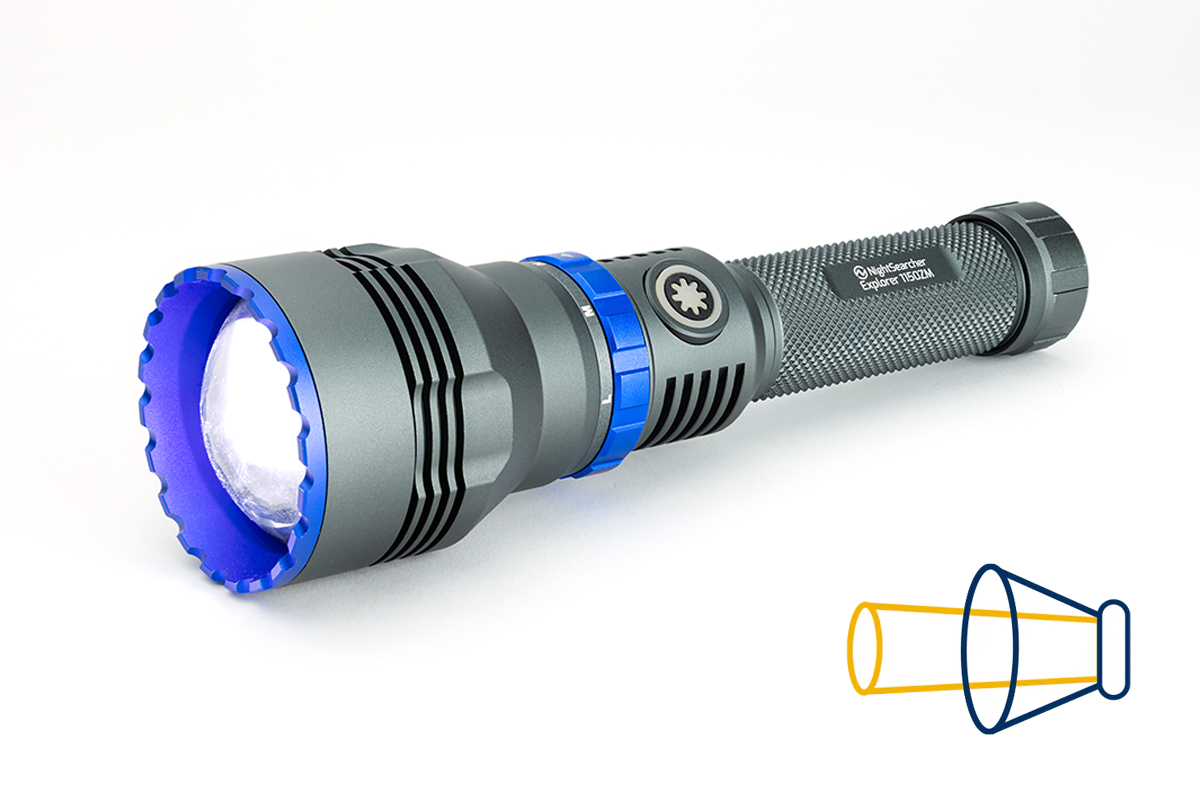
Explorer 1150 Zoom Torch
Different rescue scenarios require different beam patterns.
The Explorer 1150 Zoom Torch allows users to adjust the beam from a wide flood pattern to a focused long-range beam. This flexibility is particularly useful when moving between close-up tasks and wider search operations.
Ideal applications include:
- Woodland searches
- Missing person investigations
- Rural rescue operations
- Trail and footpath searches
- General outdoor use
An adjustable beam can be invaluable when conditions change rapidly during an operation.

Twister Pro 1500 Torch
The Twister Pro 1500 is a compact yet powerful rechargeable torch that offers excellent performance for responders who require a dependable everyday carry solution.
Its portability makes it suitable for:
- Emergency response teams
- Security personnel
- Site inspections
- Rapid deployment kits
- General operational use
A torch that is lightweight enough to carry every day is more likely to be available when it is needed most.

LaserTron LEP Long-Range Search Torch
In large-scale search operations, beam distance becomes critical.
The NightSearcher LaserTron uses advanced LEP (Laser Excited Phosphor) technology to produce exceptional long-range performance. This makes it highly effective for scanning vast search areas and identifying points of interest at significant distances.
The LaserTron is particularly suitable for:
- Coastal search operations
- Maritime rescue
- Rural missing person searches
- Open countryside searches
- Long-range reconnaissance
When maximum beam throw is required, specialised search torches like the LaserTron can provide capabilities that conventional LED torches cannot match.

Understanding Beam Patterns
The best search and rescue torch is not always the brightest torch.
Beam pattern is often more important than raw lumen output because it determines how effectively a torch illuminates the environment.
Flood Beam
A flood beam produces a wide spread of light.
It is ideal for:
- Walking trails
- Casualty treatment
- Equipment organisation
- Campsite operations
- Vehicle work
Spot Beam
A spot beam concentrates light into a narrower area.
This makes it ideal for:
- Long-distance searching
- Scanning fields
- Checking tree lines
- Coastal searches
- Identifying distant landmarks
Hybrid Beam
Many professional torches combine flood and spot characteristics into a balanced beam pattern.
This provides:
- Useful close-range visibility
- Good distance performance
- Greater versatility
Adjustable Beam
Zoom torches such as the Explorer 1150 allow users to switch between flood and spot output depending on operational requirements.
This flexibility can be valuable during dynamic search conditions.
Why Waterproof Torches Matter
Search and rescue operations rarely happen in perfect weather.
Teams often work in:
- Heavy rain
- Snow
- River environments
- Coastal locations
- Muddy terrain
- Flood conditions
A waterproof torch provides confidence that the equipment will continue working even when exposed to wet conditions.
When evaluating a rescue torch, look for:
- Strong ingress protection ratings
- Quality seals and gaskets
- Durable switch protection
- Corrosion-resistant construction
- Impact-resistant lenses
Durability is not a luxury during emergency operations. It is a requirement.
Runtime Matters Just as Much as Brightness
A torch that produces impressive light for ten minutes is of little use during a four-hour search.
Professional rescue personnel must consider:
- Maximum runtime
- Battery type
- Charging options
- Power management
- Low-power emergency modes
Rechargeable torches have become increasingly popular because they offer:
- Lower long-term operating costs
- Higher performance
- Convenient charging
- Reduced battery waste
Many rescue teams choose rechargeable primary torches and supplement them with backup lighting systems and power banks.
Why Every Rescue Team Needs a Head Torch
A head torch is not simply a backup light. In many situations, it becomes the primary source of illumination.
Head torches provide several advantages:
- Hands-free operation
- Improved mobility
- Better navigation
- Safer casualty treatment
- Easier equipment handling
Tasks such as:
- Reading maps
- Performing first aid
- Climbing steep terrain
- Setting anchors
- Handling radios
are significantly easier with a quality head torch.
This is why many SAR teams consider a powerful rechargeable head torch just as important as their primary search torch.
Key Features to Look for in a Search and Rescue Torch
When comparing torches, prioritise practical features over marketing claims.
Look for:
Simple Controls
Controls should be easy to operate with gloves and under stressful conditions.
Battery Indicators
Battery level indicators help prevent unexpected power loss during operations.
Multiple Output Levels
Different lighting modes improve efficiency and extend runtime.
Comfortable Carry Options
Clips, holsters, lanyards and mounting options improve accessibility.
Robust Construction
A durable body protects against impacts, drops and harsh environmental conditions.
Reliable Switching
A torch should respond consistently without accidental activation.
Common Search and Rescue Lighting Mistakes
Even experienced users can make mistakes when choosing lighting equipment.
Choosing Brightness Over Practicality
The highest lumen rating does not always provide the best real-world performance.
Carrying Only One Torch
Redundancy is essential in critical operations.
Ignoring Runtime
Brightness means little if the battery does not last long enough.
Buying Poor-Quality Equipment
Unreliable lighting creates unnecessary risk during emergencies.
Failing to Test Equipment
Always test torches and head torches in realistic outdoor conditions before relying on them operationally.
What Is the Best Search and Rescue Torch?
There is no single best search and rescue torch for every situation.
The ideal solution is usually a combination of:
- A high-powered search torch
- A rechargeable head torch
- A compact backup torch
For long-range searching, products such as the NightSearcher LaserTron excel. For hands-free operation, the HT2200R provides powerful and reliable illumination. For general operational use, the LightWave 1000R, Explorer 1150 Zoom and Twister Pro 1500 offer proven versatility and dependable performance.
The best torch is one that provides the right balance of:
- Brightness
- Runtime
- Beam quality
- Comfort
- Durability
- Ease of use
while matching the environment in which it will be used.
Search and Rescue Torch Buying Checklist
Before purchasing a torch or head torch, ask yourself:
✅ Is the brightness suitable for my environment?
✅ Does it provide sufficient runtime?
✅ Is it rechargeable?
✅ Can I operate it while wearing gloves?
✅ Is it waterproof or weatherproof?
✅ Is the beam suitable for my search area?
✅ Is it comfortable to carry or wear?
✅ Have I tested it in real outdoor conditions?
If the answer is yes to all of these questions, you are likely considering a reliable search and rescue lighting solution.
Frequently Asked Questions
What torch do search and rescue teams use?
Professional search and rescue teams typically use a combination of high-powered rechargeable torches, head torches and area lights. The exact equipment depends on whether the operation involves mountains, woodland, urban environments, rivers or coastal areas.
What is the best head torch for search and rescue?
The best search and rescue head torch provides powerful illumination, long runtime, reliable weather protection and comfortable hands-free operation. The NightSearcher HT2200R is a strong option for demanding rescue environments.
How many lumens do I need for search and rescue?
Most search and rescue applications benefit from between 1,000 and 3,000 lumens, although long-range searching and large open areas may require significantly more depending on operational needs.
Are rechargeable torches suitable for rescue operations?
Yes. Modern rechargeable torches provide excellent performance, lower running costs and long runtimes. Many rescue teams use rechargeable primary torches supported by backup power sources.
Why should I carry both a torch and a head torch?
A handheld torch offers superior beam control and distance, while a head torch provides hands-free illumination. Carrying both ensures maximum flexibility and improves operational effectiveness.
What is the best long-range search torch?
For operations requiring exceptional beam throw, specialised search torches using LEP technology, such as the NightSearcher LaserTron, provide outstanding long-distance visibility for coastal, maritime and open-terrain searches.

Laisser un commentaire
Ce site est protégé par hCaptcha, et la Politique de confidentialité et les Conditions de service de hCaptcha s’appliquent.