
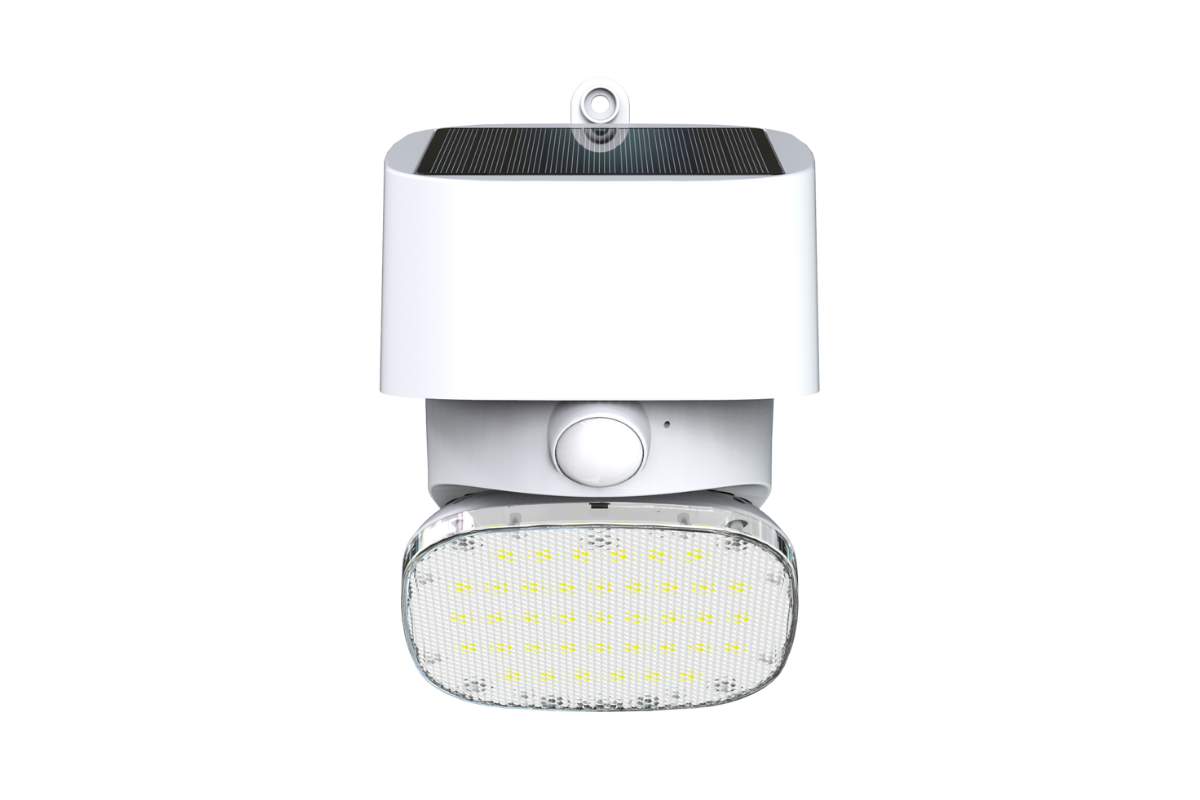
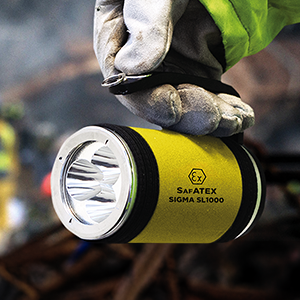
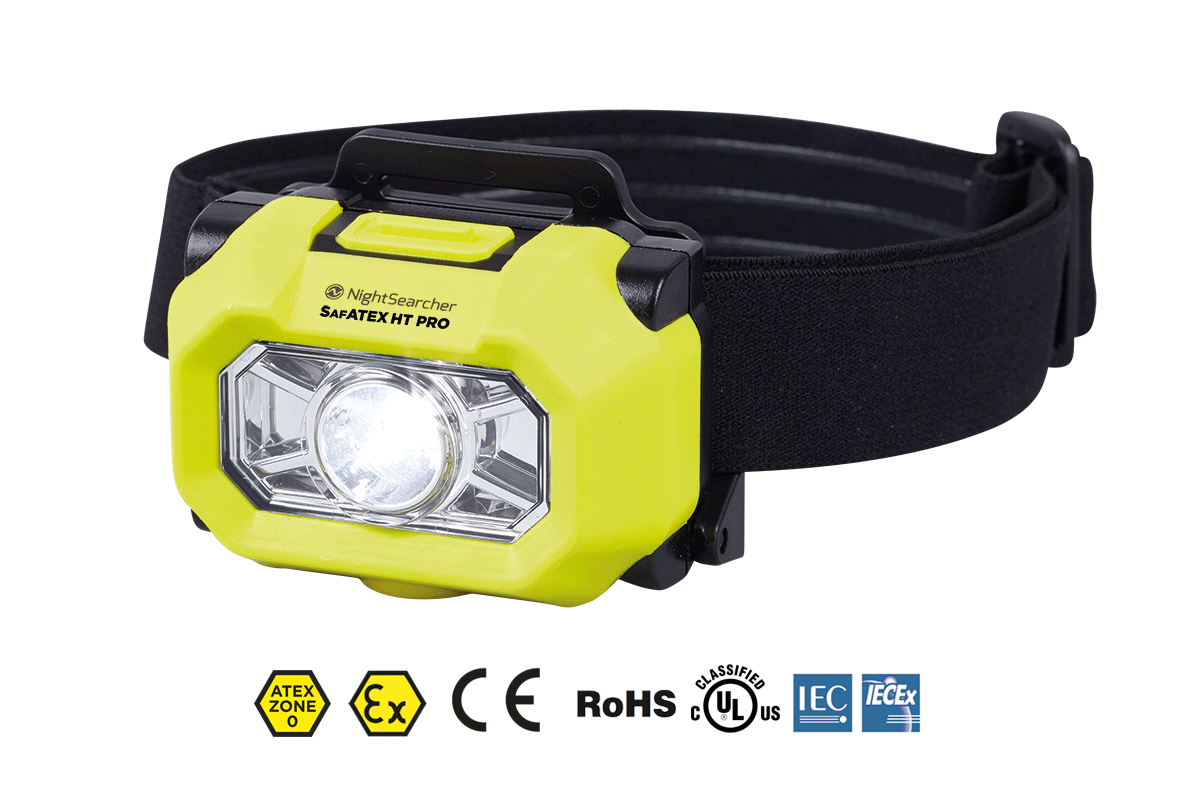
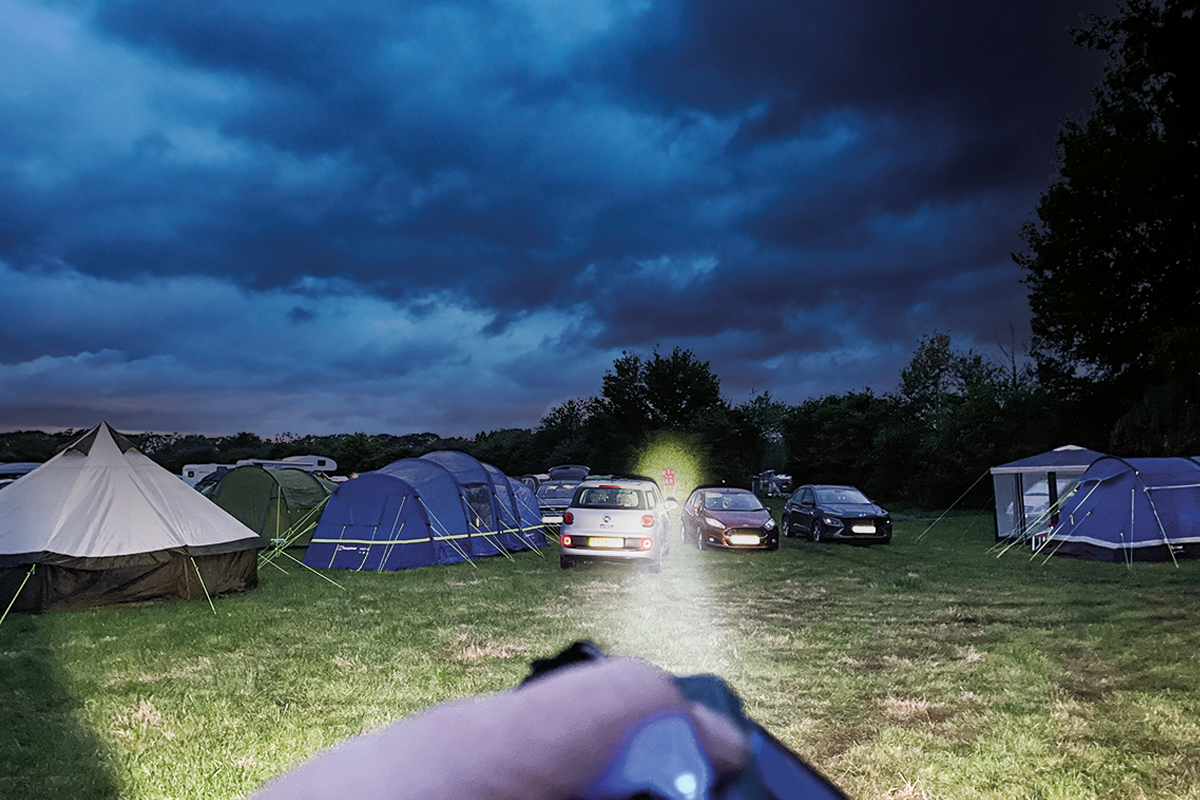
Beam distance explains how far a NightSearcher light can project useful illumination before the beam fades below a practical threshold. More than just raw brightness, factors like reflector design, lens quality, beam intensity, and power regulation influence the real-world light beam range. Whether you're using NightSearcher’s powerful floodlights for outdoor adventures or compact LED worklights for close-up tasks, understanding how beam throw is created and measured will help you choose the right light for your needs.
What does beam distance actually mean?
Beam distance is the estimated range at which a flashlight, headlamp, spotlight, or other portable light can still produce a defined amount of illumination on a target. In simple terms, it answers the question: “How far can this light reach before it becomes too dim to be useful?” That number is helpful, but it should be read as a controlled measurement rather than a guarantee of what you will see in every environment.
In product descriptions, beam distance is often expressed in meters. A light with a longer beam distance can send a tighter, more concentrated beam farther down a trail, across a field, or into a work area. A light with a shorter beam distance may still be excellent for close tasks if it produces a wide, even flood.
This is why a guide such as “Beam Distance Explained: Key Factors That Affect Light Throw” is useful: distance is not a single feature. It is the result of multiple design choices working together.
Revised Section: The Difference Between Lumens, Candela, and Throw
At NightSearcher, we understand that many people mistakenly assume that a brighter light automatically means a longer beam distance. While lumens provide a measure of total light output, they don't account for how tightly that light is focused. For instance, some of our lights may have similar lumen ratings, but their design allows one to throw light much farther than the other.. thanks to a more concentrated beam pattern.
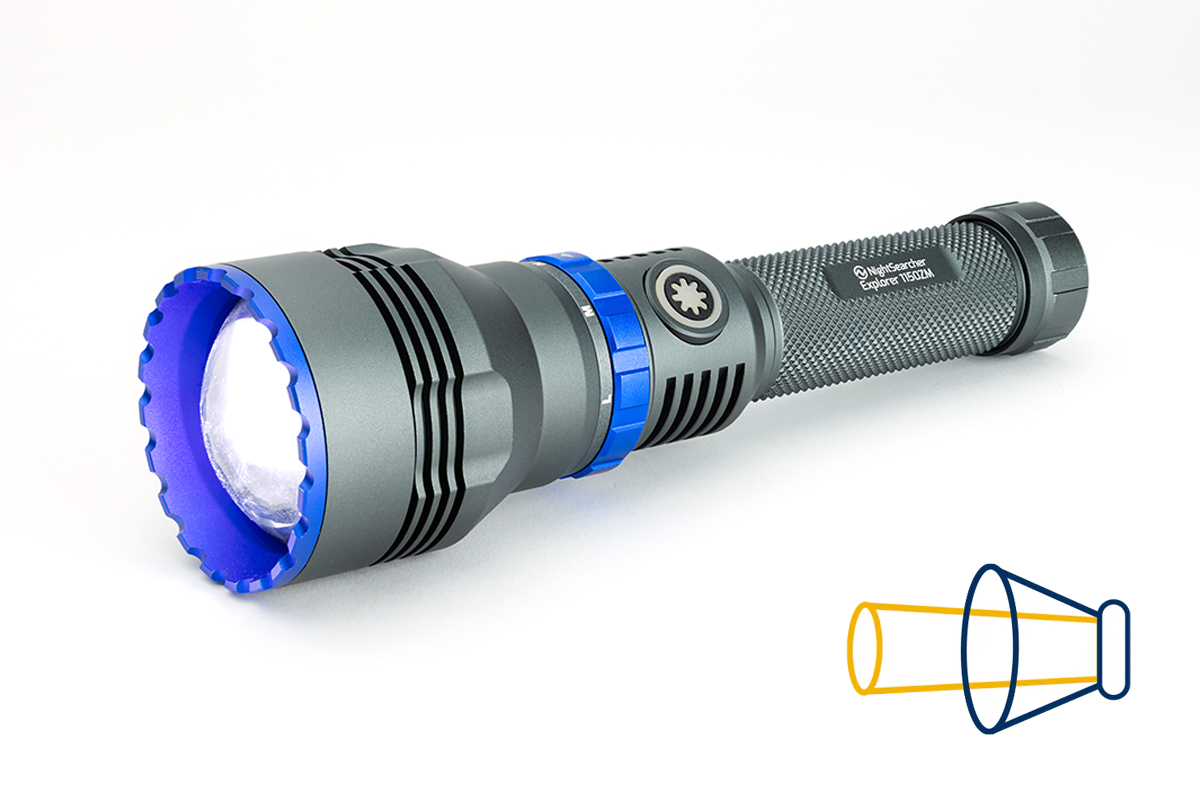
Our products, like the Explorer range, demonstrate this concept well: while they may have a modest lumen output, the superior optics are crafted to maximize distance and efficiency, making them a favorite for users who need focused light for distant tasks.
Explorer 1150
Explorer Mini
Explorer XPL-C
Explorer Twister
Optical design drives light beam range
The emitter creates light, but the reflector or lens decides where that light goes. A well-designed optical system captures output from the LED and shapes it into a beam pattern. This design has a major effect on beam efficiency, because poorly controlled light is wasted as glare, spill, or internal reflection.
Reflectors shape the hotspot
Deep, smooth reflectors often produce tighter beams with stronger hotspots. They are common in throw-focused flashlights because they help concentrate light forward. A shallow or textured reflector usually creates a smoother, wider beam with less maximum distance but better comfort for close-range use.
Reflector size matters as well. A larger reflector can usually direct light more precisely, which supports longer beam distance. This is one reason dedicated spotlights tend to have bigger heads than pocket flashlights.
Lenses control focus and spill
Some lights use lenses instead of traditional reflectors. A focused lens can create a narrow beam for long-distance spotting, while a diffused lens can spread light evenly for area illumination. Adjustable-focus lights may offer both flood and spot modes, though the quality of each mode depends on the design.
The best optic is not always the one with the longest reach. For many users, a balanced beam with a defined center and usable spill is more practical. It lets you see both the distant target and the ground around you.
Why does beam intensity matter more than brightness alone?
Beam intensity matters because distance depends on how much light is concentrated toward the target, not only on how much light the device produces overall. A very bright floodlight can illuminate a wide campsite beautifully but fail to identify something far away. A lower-lumen spotlight can look less bright up close yet perform better at distance because more of its light is aimed forward.
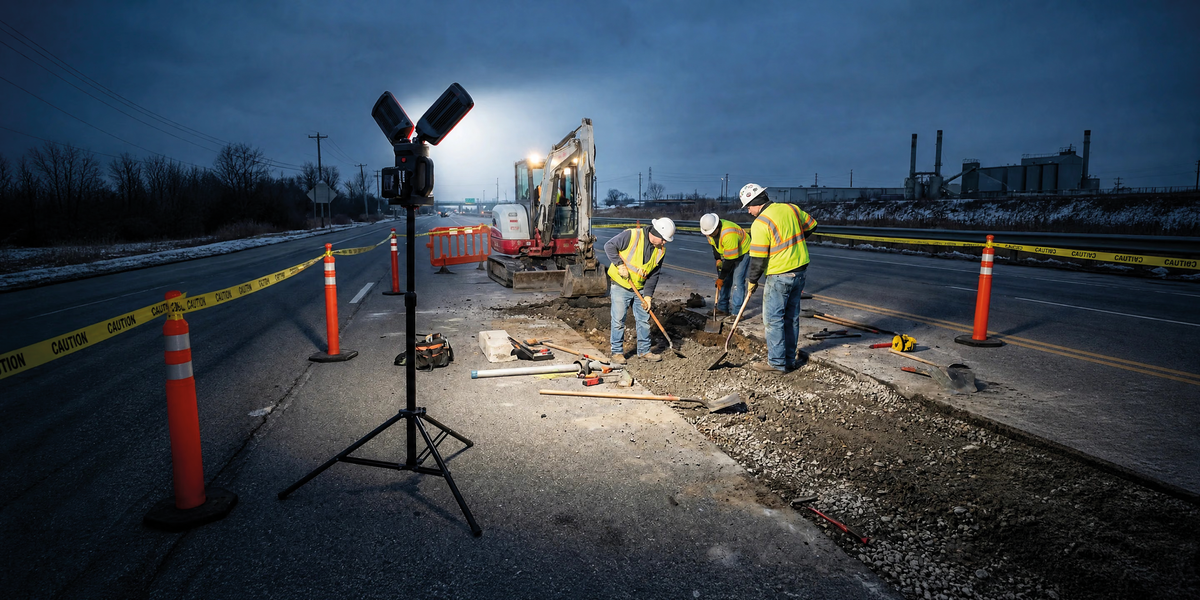
This distinction is especially important when comparing lights for outdoor or professional use. A search light, for example, needs enough intensity to reach across open space. A mechanic’s work light needs a softer spread that reduces shadows and eye strain. Both can be powerful, but they are optimized for different jobs.
When evaluating beam performance, ask yourself:
- Do I need to see far away or see a wide area nearby? Long throw favors intensity; close work favors spread.
- Will I use the light while moving? Walking or cycling benefits from spill around the central beam.
- Do I need detail recognition at distance? Identifying objects requires more useful light than merely noticing a glow.
- Will glare be a problem? A very intense hotspot can reflect harshly from fog, dust, signs, or pale surfaces.
The right choice is not the highest number on the box. It is the beam profile that fits the task.
Power and regulation affect real-world beam performance
A light may produce impressive output when freshly charged, but sustained performance depends on battery capacity, driver design, thermal management, and mode selection. Beam distance can drop as power falls or as the light reduces output to control heat.
Good regulation helps maintain consistent brightness for longer. Without it, the beam may start strong and fade steadily as the battery drains. That fading affects distance measurement in the field because a beam that reaches far in the first few minutes may not maintain that range throughout the job.
Thermal control also matters. High-output LEDs generate heat, and compact lights have limited space to dissipate it. To protect components and improve safety, many lights automatically step down from turbo or maximum mode. This does not mean the light is poorly made; it means the brightest setting may be intended for short bursts rather than continuous use.
For practical buying or usage decisions, consider these factors:
- Choose a light with stable medium and high modes, not just an impressive maximum mode.
- Match battery type to your runtime needs, especially for extended outdoor use.
- Use turbo mode for quick spotting, then step down to preserve power and reduce heat.
- Keep batteries charged and in good condition, since weak batteries reduce output and throw.
Distance measurement is useful, but conditions change everything
Distance measurement gives you a standardized way to compare lights, but real scenes are rarely standardized. Air quality, target color, ambient light, and your eyesight all affect how far a beam appears to reach. A dark tree line on a moonless night is very different from a reflective sign in dry, clear air.
Moisture and particles in the air can reduce apparent range. Fog, rain, snow, smoke, and dust scatter light back toward the user, creating glare and washing out distant targets. In those conditions, an extremely tight, powerful beam may not be as helpful as a lower, wider beam that reduces backscatter.
Target reflectivity is another big variable. Pale, reflective, or metallic surfaces are easier to see at distance. Dark soil, dense brush, black clothing, or wet rock absorb more light, making the same beam feel shorter.
Your own adaptation to darkness matters too. If you have just looked at a bright phone screen or car headlights, your ability to detect faint details at distance may be reduced. Letting your eyes adjust can make a moderate beam seem more effective.

Beam efficiency turns output into usable light
Beam efficiency describes how effectively a light turns electrical power and emitted light into a useful beam. It is influenced by the LED, driver electronics, reflector or lens, lens coating, heat handling, and beam pattern. A more efficient light wastes less output and can feel more capable without simply relying on bigger batteries or higher heat.
Efficiency is not only about runtime. It also affects comfort and control. A beam with excessive spill may waste energy lighting nearby objects when your goal is distance. A beam that is too narrow may reach far but make navigation difficult because it leaves the surrounding area dark.
Look for signs of thoughtful beam design rather than chasing one specification:
- A clean hotspot without distracting artifacts.
- Enough spill to maintain awareness of the surrounding area.
- Smooth transition between center and outer beam.
- Mode spacing that gives useful low, medium, high, and maximum levels.
- Output that remains stable during the time you actually need the light.
A light with balanced beam efficiency can be easier to use and more dependable than one that looks powerful only in a short demonstration.
Common factors that reduce beam distance
Even a well-designed light can underperform if something interferes with the beam. Some issues are environmental, while others come from maintenance or user expectations. Understanding these factors helps you get more consistent results from the gear you already own.
Here are common reasons a beam may not reach as far as expected:
- Dirty lens or reflector: Dust, fingerprints, water spots, and scratches scatter light and reduce clarity.
- Low battery charge: Reduced voltage can lower output, especially in higher modes.
- Heat step-down: A light may automatically reduce output after sustained use on maximum.
- Wrong mode selection: Eco or medium modes may be designed for runtime, not maximum throw.
- Fog, rain, or dust: Airborne particles scatter light and create visible haze.
- Wide beam design: Flood-oriented lights prioritize area coverage over distance.
- Dark targets: Non-reflective surfaces make long-range visibility harder.
- Obstructions and angles: Grass, branches, walls, and uneven ground can interrupt the beam.
Small habits help. Clean the lens with appropriate materials, carry charged batteries, and test your light in the environment where you plan to use it. A beam that looks excellent on a white wall indoors may behave differently outdoors.
Choosing the Right Beam for Your Use Case
When selecting a NightSearcher product, consider what you need your light to do. For everyday carry, our versatile models often feature a balanced beam that's perfect for quick tasks around the home or during outdoor excursions.
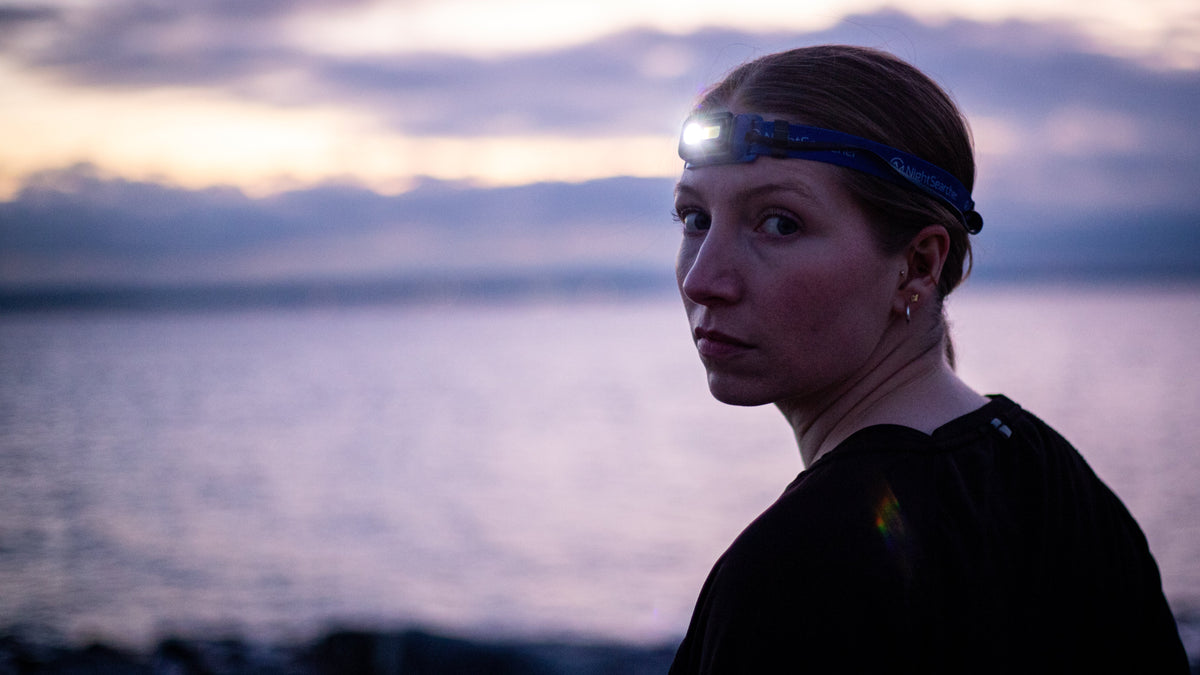
If you’re camping or hiking, our line of headlamps combines both throw and spill to illuminate the path ahead while ensuring you can safely navigate nearby terrain. For search, security, and inspection, our robust range of spotlights offers the intensity and beam distance needed to cover large areas without sacrificing detail.
Practical tips for getting better throw
You can improve real-world light beam range through better selection, setup, and use. Some improvements require choosing the right light, but others are simple operating habits.
Use this checklist before judging beam performance:
- Start with a fully charged battery so the light can reach its intended output.
- Clean the lens to remove haze, dust, or residue that scatters light.
- Use the correct mode for distance, usually high or turbo when safe and appropriate.
- Allow for heat step-down during longer sessions, and avoid assuming maximum output is continuous.
- Aim slightly below reflective haze in fog, rain, or dust to reduce backscatter.
- Compare beams outdoors rather than only against a wall, because distance and spill are easier to judge in open space.
- Match the optic to the job by choosing flood for area work, throw for distance, and balanced beams for general use.
If you are shopping, compare candela and beam profile alongside lumens. If you already own a light, experiment with grip, angle, and mode selection. Better technique can make a noticeable difference, especially outdoors.
Reading specifications without getting misled
Specifications are useful, but they work best when viewed together. A high lumen rating may suggest brightness, but it does not tell you whether the beam is concentrated or wide. A long beam distance number may suggest strong throw, but it does not guarantee a comfortable or versatile beam.
When reading product information, pay attention to the combination of output, candela, runtime, beam pattern, and battery type. If available, beam photos or descriptions can help you understand how the light behaves in practical use. A product designed for long-distance throw should make that clear through its optic size, beam intensity, and intended application.
Also consider ergonomics. A light that throws far but is too large, heavy, hot, or complicated may not be the best tool for regular use. The most effective light is the one you can carry, operate, and control when conditions are not ideal.
The main takeaway
At NightSearcher, we believe in equipping our customers with lighting solutions tailored to their needs. Whether you prioritize beam distance, efficiency, or specific tasks, our range of innovative products is designed to ensure you can illuminate your world effectively.
Beam distance is a helpful way to compare how far lights can reach, but it is only one part of real-world performance. Lumens, candela, optics, battery regulation, beam efficiency, environment, and user technique all shape what you actually see. A strong beam is not just bright; it is controlled, efficient, and suited to the task.
If you want better results, choose a light based on how you will use it rather than chasing the largest number. For close work, prioritize smooth flood and comfort. For long-range spotting, focus on beam intensity, optical design, and sustained output. For general use, look for balanced beam performance that gives you both reach and awareness.

Leave a comment
This site is protected by hCaptcha and the hCaptcha Privacy Policy and Terms of Service apply.