
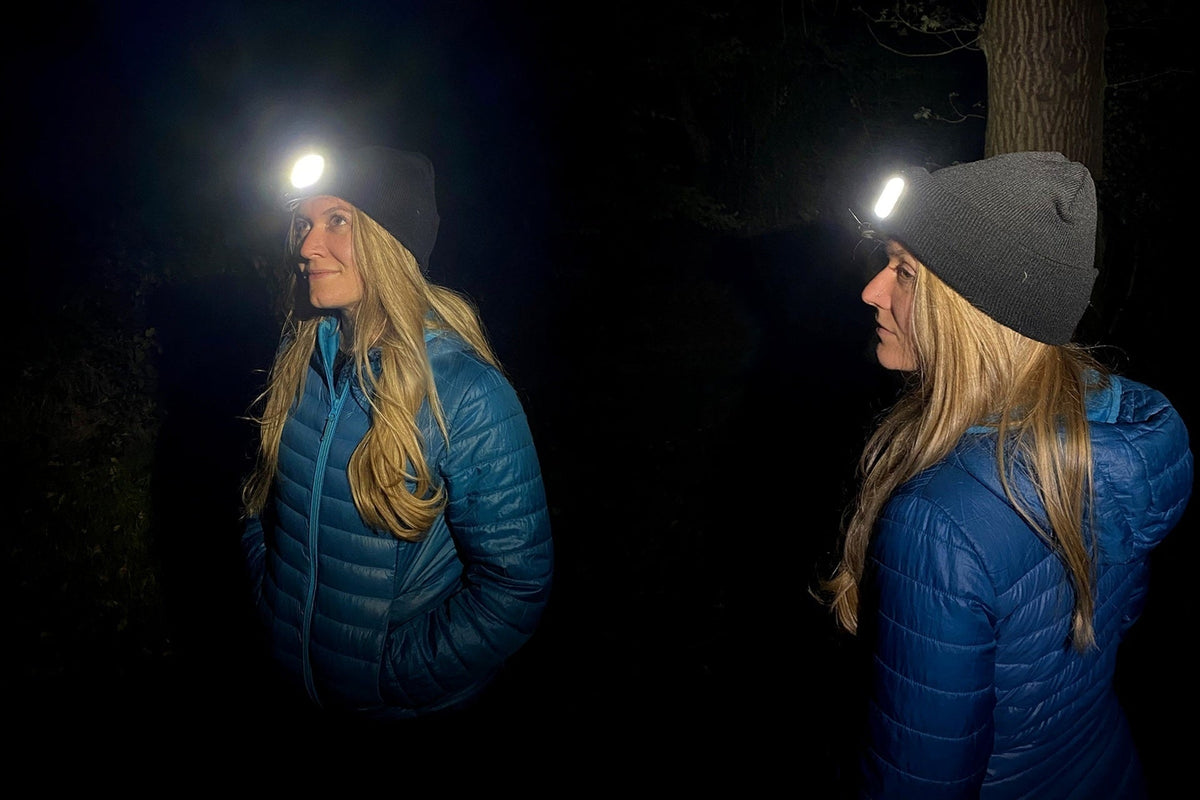
A good hiking head lamp is more than handy gear. It helps you move safely after dark, set up camp hands free, read a map, cook dinner, find dropped items, and handle delays on the trail. The best choice balances brightness, battery life, comfort, weather resistance, and simple controls so the light works when you need it.
What makes a head lamp good for hiking?
A good hiking headlamp gives you reliable hands free light without feeling heavy or being hard to use. For most hikers, the sweet spot is not always the brightest model. It is the headlamp light that gives enough visibility, lasts through the route, and stays comfortable on your forehead or over a hat.
Think about how you hike. A short sunset walk calls for different features than a pre dawn summit, a winter trek, a backpacking trip, or a hunting weekend. The right head lamp should fit your real use, not just a spec sheet.
Just like our LightWave 1000R hands-free rechargeable head torch.

https://nightsearcher.co.uk/products/lightwave-1000r
Brightness matters, but beam control matters more
Lumens show total light output, and they are often the first number shoppers notice. Many hikers do well with about 200 to 300 lumens for trail walking, camp chores, and simple navigation. A model like the Black Diamond Spot 400, with 400 lumens, gives more reach while still offering lower settings for battery savings and close up work.
More brightness helps when you move fast, scan a trail marker, descend rough ground, or hike in bad weather. But max output can drain batteries faster and create glare when you read, cook, or talk at camp. A useful headlamp lets you raise or lower brightness fast.
Look for beam variety as much as raw power:
- Flood beam: Wide, soft light for cooking, tent setup, packing, and walking around camp.
- Spot beam: Narrower, longer reaching light for route finding and spotting objects farther down the trail.
- Red light mode: Helpful for keeping night vision and avoiding harsh light around other campers.
- Strobe or SOS mode: Useful in emergencies, especially if you need to get attention.
- Dimming control: Lets you use only the light you need, which extends runtime.
The brightest rechargeable headlamp can look appealing, but brightness alone should not decide the purchase. A lower lumen light with better beam control can feel more useful than a very bright lamp that burns power or blinds people nearby.
Rechargeable and replaceable batteries each have a place
Headlamp batteries are a major difference between models. Rechargeable lights are convenient for frequent hikers because you can top them up before each trip, often with USB or USB C charging. They also reduce disposable waste and may save money if you use your headlamp often.
Replaceable battery models, often using AAA batteries, still matter in remote areas. If the light dies, you can swap in fresh batteries right away instead of waiting for a power bank or outlet. Some headlamps use hybrid systems, giving you rechargeable power with the backup flexibility of standard batteries.
Choose rechargeable if you:
- Hike often and can charge gear before each trip.
- Carry a power bank for your phone, GPS, or camera.
- Want to reduce disposable battery use.
- Prefer a steady pre trip charging routine.
Choose replaceable or hybrid batteries if you:
- Take multi day trips without easy charging access.
- Hike in cold conditions where battery performance can drop.
- Want simple backup power in your pack.
- Prefer batteries that are easy to find for travel or emergency kits.
For overnight trips, do not rely on hope. Start with a fully charged light, bring backup batteries if your route is remote, and know how long your headlamp runs on the brightness setting you will actually use.
Comfort and weight shape the whole experience
A lightweight headlamp can make a long hike feel easier, especially when you wear it for hours. Even small weight changes matter when the lamp bounces as you walk or presses into your forehead. Comfort is not just about weight, though; strap design, balance, and fit all matter.
A lamp with too much weight in front may feel fine for ten minutes but tiring after an hour. A secure strap helps prevent slipping when you sweat, wear a beanie, or move fast over rough ground. Trail runners and fast hikers may prefer bungee style or elastic straps because they stay put without needing to be too tight.
Before you buy, check these comfort details:
- The strap adjusts easily with gloves or cold fingers.
- The lamp tilts downward for reading, cooking, or watching your footing.
- The housing does not dig into your forehead.
- The battery pack, if separate, does not feel awkward or pull the strap backward.
- The buttons are large enough to use in the dark.
A powerful light you hate wearing is not the best hiking choice. The best model is the one you will keep on when the trail gets dark.
Durability and weather resistance protect your safety margin
A durable headlamp should handle bumps, rain, dust, and normal trail abuse. Hiking gear gets dropped, stuffed into packs, exposed to moisture, and used with dirty hands. Fragile lights may work for a backyard task, but the backcountry needs more reliability.
Pay attention to IP ratings. An IPX4 rating generally means splash resistance, which may be enough for light rain. IPX7 or IPX8 ratings mean stronger water resistance, with IPX8 usually tied to submersion resistance under stated maker conditions. If dust matters, look for a rating where the first number covers solid particles.
Build materials matter too. Some rugged headlamps use tougher plastics, sealed housings, or aluminum parts to improve impact resistance. You do not need the heaviest model on the shelf, but you do want a light that can survive a drop near camp or steady weather.
Which headlamp fits your hiking style?
The best headlamp depends on where, when, and how you use it. A casual evening hiker, a backpacker, a trail runner, and a hunter may all need different features, even in the same category.
For weekend hiking and day trips
Choose a balanced model with moderate brightness, simple controls, and comfortable straps. A 200 to 300 lumen range is usually enough if you only need backup light for late returns or early starts. Prioritize low and medium modes because you will use them more than max output.
For backpacking and camping
A camping headlamp should be efficient, comfortable, and easy to dim. Red light is useful near tents because it is less harsh than white light. Long runtime at low settings matters more than short bursts of extreme brightness.
For night hiking and summit starts
Look for higher output, a strong spot beam, and steady battery performance. You may need to see farther ahead, find trail junctions, or move over rocks and roots with more confidence. A rechargeable or hybrid model with clear battery indicators can help you avoid surprises before dawn.
For hunting and wildlife trips
Hunters often need quiet controls, color modes, and tough build quality. The best head torch for hunting may include red or green light to reduce disturbance and protect low light vision. If you compare the brightest headlight for hunting with the best headlamp for hunting overall, remember that stealth, runtime, weather resistance, and beam color may matter as much as peak lumens. We recommend something like the LightWave 650 RGB especially for fishing trips as this light offers Red, Green and Blue modes which fish and other wildlife species can't see.

https://nightsearcher.co.uk/products/lightwave-650-rgb
Smart features are useful only when they stay simple
Modern headlamps can include memory modes, lockout settings, battery meters, reactive lighting, and several color options. These features can help, but only if you understand them before you leave home. Lockout mode keeps the lamp from turning on inside your pack and draining power. A battery meter helps you decide whether to recharge or replace batteries before the next night.
Problems start when a headlamp needs too many button presses for basic settings. In cold rain or darkness, simple wins. Practice switching between flood, spot, red light, and lockout mode before your trip so you are not learning the controls when visibility is poor.
Use this quick pre trip check:
- Charge the battery or install fresh batteries.
- Test every light mode, including low, high, red, and strobe.
- Confirm the tilt hinge holds its position.
- Adjust the strap over the hat or hood you plan to wear.
- Pack spare batteries, a small power bank, or a backup light for remote trips.
- Lock the headlamp before putting it in your pack.
Maintenance keeps your light reliable
Headlamps are easy to forget because they often sit in a gear bin until the next trip. A few minutes of care can prevent common failures. After wet hikes, open the battery compartment if the design allows, dry the outside, and let the strap air out before storage.
Wipe dirt from the lens so the beam stays clear. Check for corrosion around battery contacts, especially if you use disposable batteries. If you store the light for a long time, remove replaceable batteries to lower the risk of leakage.
Rechargeable models should not sit empty for long periods. Top them up before storage and again before a trip. For cold weather hikes, keep spare batteries or the headlamp itself warm in a pocket when you can, because cold can lower performance.
A practical way to choose
If you feel stuck between similar models, ignore the marketing language for a moment and match the headlamp to your most common use. Most hikers should start with a comfortable, weather resistant lamp with adjustable brightness, flood and spot beams, red mode, and enough runtime for the longest expected outing. Then decide whether rechargeable, replaceable, or hybrid power fits your style.
Use this simple buying filter:
- Choose comfort first if you hike long hours or wear the light around camp.
- Choose runtime first if you backpack, winter hike, or often start before sunrise.
- Choose beam distance first if you navigate rough trails in the dark.
- Choose red or green modes first if you hunt, watch wildlife, or share camp with others.
- Choose rugged ratings first if you hike in rain, snow, dust, or remote terrain.
The right headlamp does not need to be the most expensive or the brightest. It needs to be dependable, easy to use, and suited to the conditions you actually face.
Final takeaway
A hiking headlamp is a small item with a big safety role. Look for balanced brightness, useful beam modes, reliable power, a comfortable fit, and enough durability for real outdoor use. Whether you choose a compact lightweight headlamp, a rugged rechargeable model, or a versatile hybrid, the best pick is the one that gives you confidence when daylight fades and the trail is still ahead.
Q&A
Question: How many lumens do most hikers actually need in a headlamp?
Short answer: Many hikers are well served by about 200 to 300 lumens for trail walking, camp chores, and general navigation. Higher output can help with fast movement, rough terrain, poor weather, or spotting distant trail markers, but beam control and runtime are often more important than peak brightness.
Question: Is a rechargeable headlamp better than one with replaceable batteries?
Short answer: It depends on how and where you hike. Rechargeable headlamps are convenient for frequent use, reduce disposable battery waste, and work well when you can charge before trips. Replaceable or hybrid battery models are better for remote, multi day, cold weather, or emergency use because you can swap in fresh batteries right away.
Question: What headlamp features matter most for backpacking and camping?
Short answer: For backpacking and camping, prioritize long runtime at low and medium settings, a comfortable fit, easy dimming, flood and spot beams, and red light mode. Around camp, extreme brightness is usually less useful than efficient, adjustable light that will not disturb other campers or drain the battery quickly.
Question: What does an IP rating tell you about a headlamp?
Short answer: An IP rating describes resistance to water and, in some cases, dust. IPX4 generally means splash resistance and may be enough for light rain, while IPX7 or IPX8 indicates stronger water resistance. If dust protection matters, look for a rating where the first number indicates solid particle protection.
Question: What should you check before taking a headlamp on a hike?
Short answer: Before a trip, charge the battery or install fresh batteries, test all light modes, confirm the tilt hinge works, adjust the strap over the hat or hood you plan to wear, pack backup power for remote routes, and lock the headlamp before storing it in your pack.


Hinterlasse einen Kommentar
Diese Website ist durch hCaptcha geschützt und es gelten die allgemeinen Geschäftsbedingungen und Datenschutzbestimmungen von hCaptcha.