
Good lighting makes practical work safer, cleaner and far less frustrating. Whether you are decorating a room, repairing a vehicle, fitting out a workshop or setting up on a building site, work lights on stand give you height, spread and flexibility that a handheld torch simply cannot match. The right choice depends on where you work, how much light you need, how often you move the unit and how tough the conditions are likely to be.
What should you look for in work lights on stand?
The best work lights on stand should be bright enough for the task, stable enough for the setting and easy enough to adjust without slowing you down. A good light should help you see clearly across the work area, reduce shadows, withstand knocks and pack away without fuss. Rather than choosing the brightest option by default, it is better to match the light output, stand design, power source and build quality to the jobs you actually do.
For light DIY, a compact tripod light may be all you need. For regular trade use, stronger construction lights with robust frames, adjustable heads and reliable weather resistance are usually a better fit. If you often move between rooms, floors or sites, portability becomes just as important as brightness.
Why a stand makes such a difference
A work light on the floor can be useful, but it often throws light upwards at an awkward angle or creates hard shadows behind tools, ladders and materials. A stand lifts the light source, helping it spread more evenly across the area. This is especially useful when plastering, painting, sanding, wiring, tiling or carrying out detailed repair work.
Height also gives you more control. You can angle the light down over a bench, across a wall or into a corner without needing to balance it on a box or hook it somewhere unsafe. Many stands extend and collapse, so you can raise the light for broad coverage or keep it lower for close-up work.
Stands are also helpful when several people are working in the same space. Instead of everyone relying on small personal lamps, one well-positioned unit can illuminate a shared zone. That makes movement easier, reduces clutter and helps people spot hazards such as cables, uneven flooring or wet surfaces.
The main types of work lights
Work lights on stand come in a few common styles. The right one depends on your environment and the level of flexibility you need.
Single-head tripod lights
These are simple, practical and popular for domestic jobs and general site tasks. A single lamp head sits on an adjustable stand, giving a focused spread of light. They are often easy to carry and quick to set up, making them a sensible option for decorators, mobile trades and homeowners tackling occasional projects.
Twin-head stand lights
Twin-head models offer more coverage and control. Each head can usually be angled separately, so you can light two areas at once or reduce shadows by crossing the beams. These are useful in larger rooms, garages, workshops and construction spaces where one direction of light is not enough. Our model is the TwinStar Connect, portable illumination with 12,000 lumens and a 50m beam. Compatible with batteries from 10 leading power tool brands, it features dual light heads that offer multi-angle adjustment and a choice of 1 or both light heads in operation.
View the TwinStar Connect here

Tower and area lights
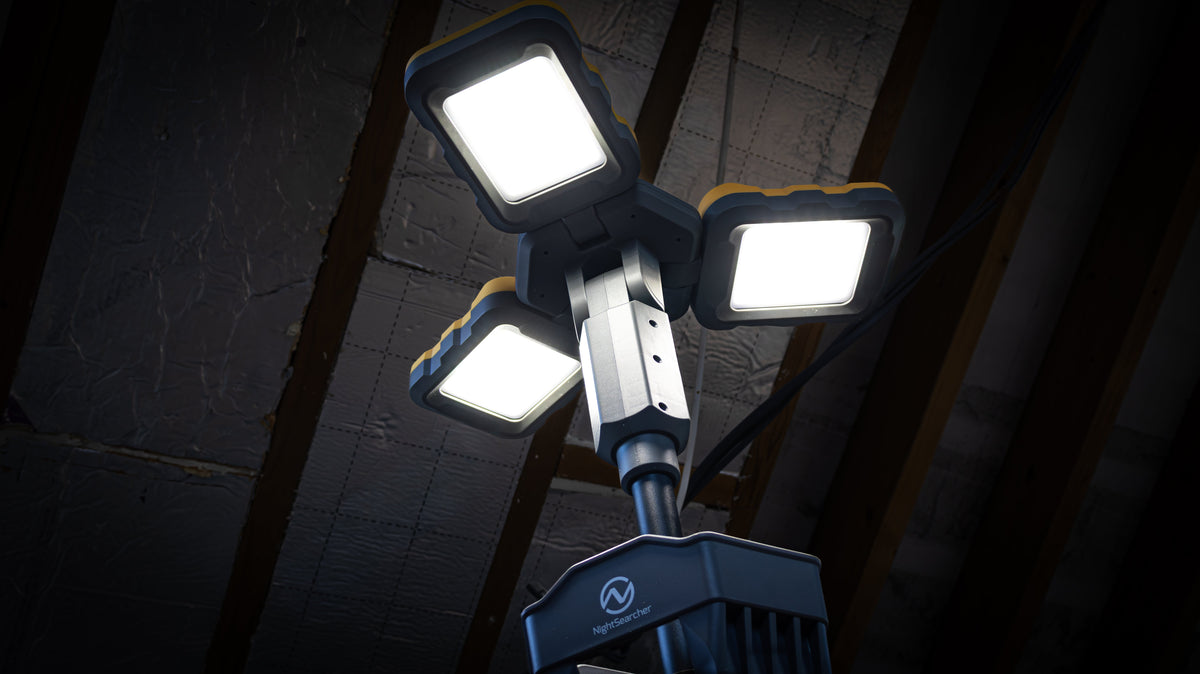
Tower-style portable work lights are designed to spread light in multiple directions. They are less about pointing one beam and more about filling a space. This can be useful for general visibility on site, emergency work, outdoor tasks or large open areas where people need to move safely. Our most popular tower light, the Tower Pro 7K is the perfect portable floodlight for any job, with its multi-angle rotational lights and detachable light head featuring a hanging hook and magnetic base. It can run on AC power for longer projects and has a robust housing for durability. Stay productive with warm and cool light modes and a battery charging indicator. Comes with a convenient carry case.

Compact foldable lights
Some stand-mounted lights are designed primarily for convenience. They fold down neatly, weigh less and suit jobs where storage space is limited. They may not be as powerful or rugged as heavier-duty options, but they can be ideal for maintenance work, small renovations and jobs that involve frequent transport. Our best seller and one of our newest products: TriStar Connect Hybrid Tower Light which is a rugged, collapsible work light delivering up to 10,000 lumens with hybrid power (18V power tool batteries or 230V AC mains). Features 360° illumination, adjustable mast up to 2.3m, and selectable warm or cool white light modes for versatile site lighting.

Brightness, beam spread and colour temperature
Brightness is usually one of the first things people notice, but it is not the only factor that matters. A very bright light with a narrow or harsh beam can still be uncomfortable to work under. Look at how the light spreads, how adjustable the head is and whether it creates glare.
For broad tasks such as decorating, plastering or general construction work, an even spread is often more useful than a sharp spotlight. For mechanical work, inspection or detailed fitting, a more directional beam can help you see texture, edges and small components.
Colour temperature also affects comfort and visibility. Cooler white light can make detail easier to see and is common on sites and in workshops. Warmer light may feel softer indoors, but it can sometimes hide surface imperfections. For painting and finishing, choose lighting that lets you judge surfaces clearly without making colours look unnatural.
A practical way to think about it:
-
Small room or occasional DIY: moderate brightness, wide beam and simple adjustment.
-
Garage or workshop: stronger output, stable tripod and directional control.
-
Construction site: rugged construction lights with durable housing and suitable protection.
-
Outdoor work: weather-resistant design, secure footing and dependable power.
-
Fine detail work: adjustable head, controlled beam and minimal glare.
Mains-powered or rechargeable?
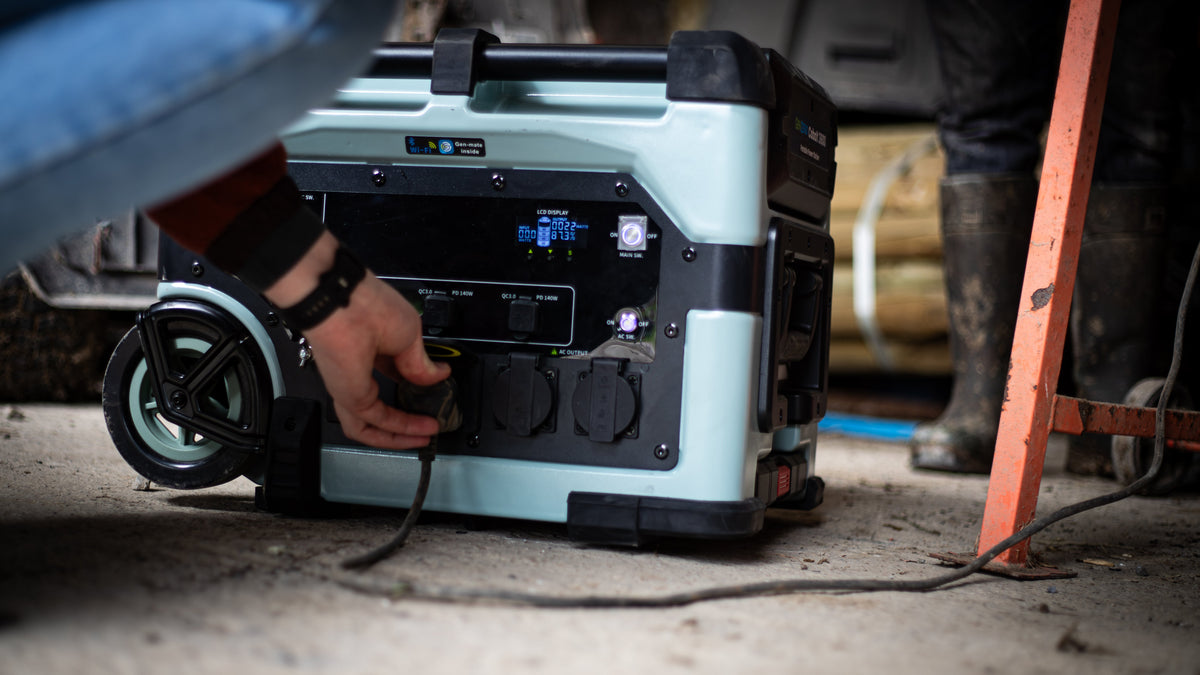
Power source has a big impact on how convenient your light feels in real use. Mains-powered units are useful when you need consistent output for long periods and have safe access to electricity. They are common in workshops, garages and longer indoor projects where extension leads can be managed properly.
Rechargeable models give you more freedom. They are useful when power is not yet available, when you are working outdoors, or when trailing cables would create a trip hazard. The trade-off is that you need to manage battery life, charging time and brightness settings.
Some portable work lights offer multiple brightness modes, which can stretch runtime and make the unit more adaptable. Full brightness might be useful for setting up or checking a large area, while a lower setting may be enough for steady work at close range. If you regularly work away from sockets, battery performance should be one of your top considerations.
How important is durability?
Durability matters a lot if the light will be used on busy sites, in vans, outdoors or around dust and damp. A lightweight unit may be fine for home decorating, but it can become a false economy if it tips easily, cracks after a knock or struggles in rough conditions.
Look for a stand that feels secure when extended. Wide legs, locking mechanisms and a balanced lamp head all help prevent wobbling. If the light will be moved often, check that the hinges, clamps and handles look practical rather than delicate.
The lamp housing is just as important. Construction lights may face impacts, dust, splashes and constant handling, so robust casing and suitable protection are worth considering. You do not need to overbuy for occasional use, but you should be honest about how the light will be treated. A unit that lives in a van and works on site every week needs to be tougher than one stored in a cupboard for weekend tasks.
Safety features are not optional
A good work light should make the job safer, not introduce new risks. Stability is the first concern. If the stand is too narrow, too light or awkward to adjust, it may become a hazard, especially in cramped rooms or on uneven ground.
Heat is another consideration. Modern LED lights generally run cooler than older halogen styles, but the housing can still become warm during extended use. Keep lights away from flammable materials, avoid covering vents and give the unit space to operate properly.
Cable management also matters. If you choose a mains-powered model, route leads away from walkways and cutting areas. Use suitable extension leads for the environment, especially outdoors, and avoid overloading sockets. For rechargeable lights, store and charge batteries according to the manufacturer’s instructions.
A simple safety checklist before starting work:
-
Place the stand on firm, level ground where possible.
-
Extend the legs fully and lock the stand securely.
-
Angle the light before work begins, not while balancing tools.
-
Keep cables clear of feet, ladders, doors and wet areas.
-
Check that the light is suitable for indoor, outdoor or damp use as needed.
-
Let the unit cool before packing it away if it has been running for a long time.
Which features are worth paying more for?
The features worth paying more for are the ones that remove daily irritation and improve safety. Adjustable height, stable legs, strong hinges, usable handles and sensible brightness settings can make a bigger difference than a flashy specification. If you use a light regularly, convenience and reliability quickly become more valuable than novelty.
A dual-head design is worth considering if shadows are a constant problem. Battery power is worth paying for if you often work before permanent power is available. Weather resistance is worth prioritising if the light will be used outside, in unfinished buildings or around moisture.
There are also smaller details that matter over time. A stand that folds neatly saves space in a van or shed. A head that rotates smoothly saves frustration. A light that can be cleaned easily will stay more useful in dusty environments. These are not glamorous features, but they affect how often you reach for the light and how comfortably you work.
Matching the light to the job
Different jobs create different lighting problems. Painting a wall, for example, benefits from angled light that reveals roller marks and surface defects. Car repairs often need light from above and from the side, because engine bays and wheel arches create deep shadows. Flooring work may need broad, low glare coverage so you can see joins, levels and edges.
For general household projects, choose something easy to carry and store. For trade work, lean towards a more robust stand, brighter output and better adjustability. For larger building sites, construction lights should be chosen with safety, durability and coverage in mind rather than simple convenience.
If you are unsure, think about your most demanding regular task rather than your easiest one. A light that copes well with your hardest normal job will usually handle everything below that. At the same time, avoid buying a bulky heavy-duty unit if you mainly need something for loft checks, flat-pack assembly or occasional decorating.
Common mistakes to avoid
Many people buy work lighting in a rush, usually after discovering that a room, garage or site is darker than expected. A little planning helps you avoid the most common disappointments.
-
Choosing brightness alone: More light is not always better if it creates glare or harsh shadows.
-
Ignoring the stand: A powerful lamp on a flimsy stand is awkward and potentially unsafe.
-
Forgetting storage: If it is difficult to fold, carry or store, you may stop using it.
-
Overlooking power access: Mains models are only convenient when sockets are available and cables are safe.
-
Using indoor lights outdoors: Always check suitability before exposing a light to damp or weather.
-
Buying too small for shared work: One compact light may not be enough for a room with several people and tools.
A sensible buying approach
Start by deciding where the light will be used most often. Indoors, outdoors, in a workshop, on a site and in a vehicle all place different demands on the unit. Then consider whether you need focused task lighting, wide area coverage or a mix of both.
Next, think about movement. If the light will stay in one workshop, weight may not matter much. If it will be carried between jobs, look for a practical handle, fast setup and a compact folded size. Finally, check the stand quality. If the stand feels like an afterthought, the light may be frustrating no matter how bright it is.
A good choice should feel balanced: bright enough, tough enough, portable enough and simple enough to use without constant adjustment.
Final thoughts
Work lights on stand are one of those practical tools that can improve almost every job around them. They help you see detail, work more safely and keep going when natural light or fixed lighting is not enough. The best option is not always the biggest or brightest; it is the one that suits your workspace, power access, storage and everyday tasks.
If you compare portable work lights with those needs in mind, you will be far more likely to choose a unit that earns its place in the van, garage, shed or workshop. Good lighting is not just a convenience. It is part of doing the job properly.

Hinterlasse einen Kommentar
Diese Website ist durch hCaptcha geschützt und es gelten die allgemeinen Geschäftsbedingungen und Datenschutzbestimmungen von hCaptcha.